papers
Articles, theses, manuscripts in reversed chronological order.
My GitHub & Google Scholar
2025
- Distinct impact of PI(4)P flux in regulating PI(4,5)P₂ steady states and oscillationsX. J. Xǔ, Chee San Tong, and Min WuSubmitted, 2025
Plasma membrane (PM) phosphatidylinositol 4,5-bisphosphate [PI(4,5)P₂] regulates indispensable processes such as exocytosis, endocytosis and actin cytoskeleton remodeling in eukaryotic cells. Since phosphatidylinositol 4-phosphate [PI(4)P] has been long regarded as the primary precursor of PI(4,5)P₂, perturbing PM PI(4)P is expected to impact the dynamics of PM PI(4,5)P₂. Yet, recent evidence suggests that PM PI(4)P has a limited role in the synthesis and function of PI(4,5)P₂. In this paper, we address this puzzling discrepancy by studying the collective dynamics of PM PI(4)P and PI(4,5)P₂ through a dynamical systems conceptual framework. Leveraging live-cell imaging, we observed periodic traveling waves of PI(4)P on the PM of mast cells, challenging the notion that this precursor lipid only exists at steady state levels. We then found that a reduction in PM PI(4)P synthesis rate attenuated PI(4,5)P₂ oscillation amplitude while conserving space-average PM steady state level. We assessed the functional consequence of PI(4,5)P₂ oscillation amplitude by examining its interplay with Rho GTPase Cdc42, which cooperatively regulates the actin cytoskeleton with PI(4,5)P₂. We showed that both PM PI(4)P and PI(4,5)P₂ oscillations are coupled to oscillations of membrane-bound active Cdc42. Finally, we demonstrated that lowering PM PI(4)P synthesis rate alone was sufficient to reversibly eliminate oscillations of active Cdc42. Beyond the steady state depiction, cortical oscillations require a critical PI(4)P synthesis rate.
@article{Xu2025flux,
  title = {{Distinct impact of PI(4)P flux in regulating PI(4,5)P₂ steady states and oscillations}},
  author = {Xǔ, X. J. and Tong, Chee San and Wu, Min},
  journal = {Submitted},
  year = {2025},
}

2024
- Competition and synergy of Arp2/3 and formins in nucleating actin waves.Xiang Le Chua, Chee San Tong, Maohan Su, and 4 more authorsCell Reports, Jul 2024
Actin assembly and dynamics are crucial for maintaining cell structure and changing physiological states. The broad impact of actin on various cellular processes makes it challenging to dissect the specific role of actin regulatory proteins. Using actin waves that propagate on the cortex of mast cells as a model, we discovered that formins (FMNL1 and mDia3) are recruited before the Arp2/3 complex in actin waves. GTPase Cdc42 interactions drive FMNL1 oscillations, with active Cdc42 and the constitutively active mutant of FMNL1 capable of forming waves on the plasma membrane independently of actin waves. Additionally, the delayed recruitment of Arp2/3 antagonizes FMNL1 and active Cdc42. This antagonism is not due to competition for monomeric actin but rather for their common upstream regulator, active Cdc42, whose levels are negatively regulated by Arp2/3 via SHIP1 recruitment. Collectively, our study highlights the complex feedback loops in the dynamic control of the actin cytoskeletal network.
@article{10.1016/j.celrep.2024.114423, title = {{Competition and synergy of Arp2/3 and formins in nucleating actin waves.}}, author = {Chua, Xiang Le and Tong, Chee San and Su, Maohan and Xǔ, X. J. and Xiao, Shengping and Wu, Xudong and Wu, Min}, journal = {Cell Reports}, doi = {10.1016/j.celrep.2024.114423}, year = {2024}, month = jul, volume = {43}, pages = {114423}, } -
 Nonlinear dynamics in phosphoinositide metabolismSuet Yin Sarah Fung, X. J. Xǔ, and Min WuCurrent Opinion in Cell Biology, Jun 2024
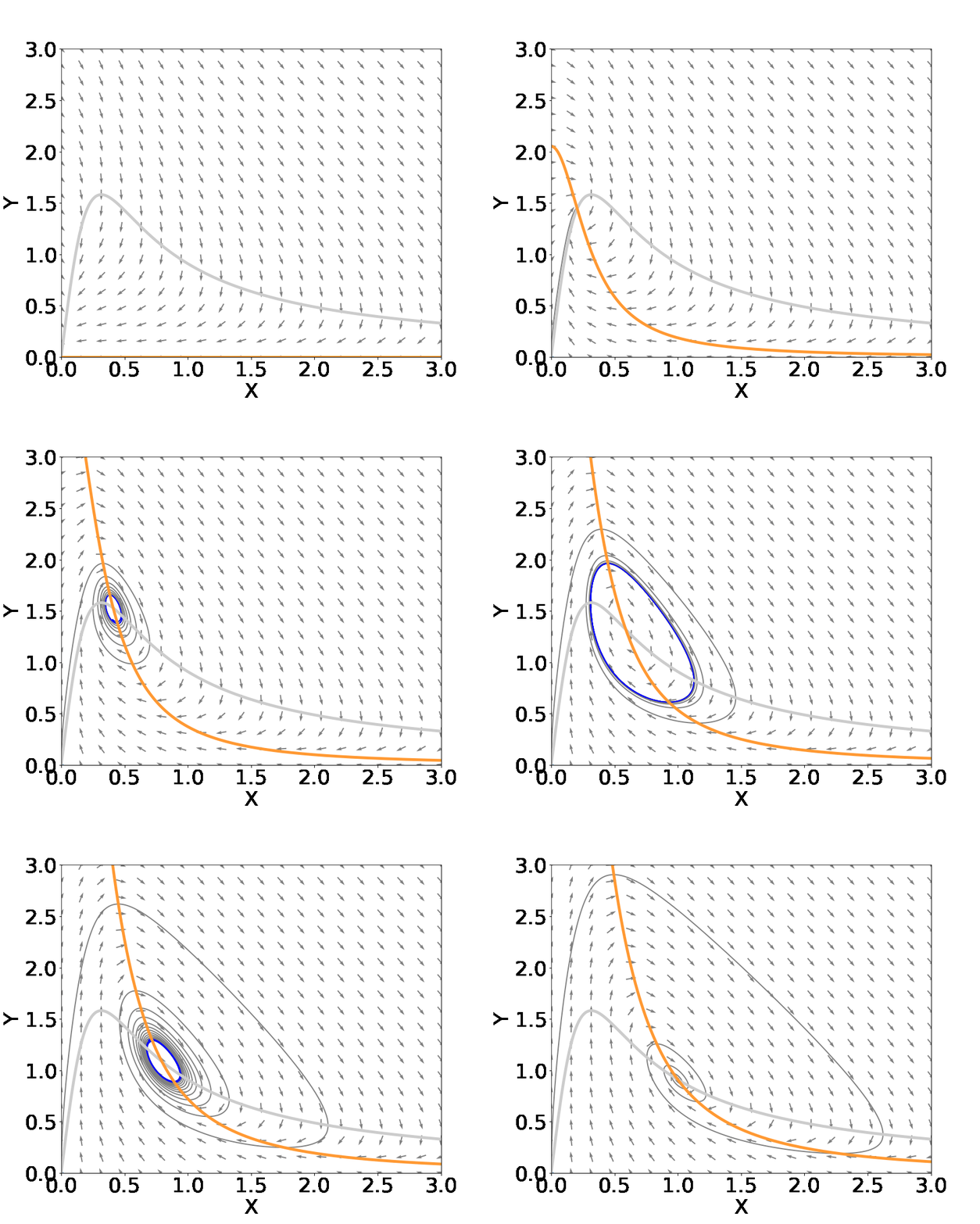
Phosphoinositides broadly impact membrane dynamics, signal transduction and cellular physiology. The orchestration of signaling complexity by this seemingly simple metabolic pathway remains an open question. It is increasingly evident that comprehending the complexity of the phosphoinositides metabolic network requires a systems view based on nonlinear dynamics, where the products of metabolism can either positively or negatively modulate enzymatic function. These feedback and feedforward loops may be paradoxical, leading to counterintuitive effects. In this review, we introduce the framework of nonlinear dynamics, emphasizing distinct dynamical regimes such as the excitable state, oscillations, and mixed-mode oscillations—all of which have been experimentally observed in phosphoinositide metabolisms. We delve into how these dynamical behaviors arise from one or multiple network motifs, including positive and negative feedback loops, coherent and incoherent feedforward loops. We explore the current understanding of the molecular circuits responsible for these behaviors. While mapping these circuits presents both conceptual and experimental challenges, redefining cellular behavior based on dynamical state, lipid fluxes, time delay, and network topology is likely essential for a comprehensive understanding of this fundamental metabolic network.
@article{10.1016/j.ceb.2024.102373,
  title = {{Nonlinear dynamics in phosphoinositide metabolism}},
  author = {Fung, Suet Yin Sarah and Xǔ, X. J. and Wu, Min},
  journal = {Current Opinion in Cell Biology},
  doi = {10.1016/j.ceb.2024.102373},
  year = {2024},
  volume = {88},
  month = jun,
}

2023
-
 Periodicity, mixed-mode oscillations, and multiple timescales in a phosphoinositide-Rho GTPase networkChee San Tong, X. J. Xǔ, and Min WuCell Reports, Jun 2023
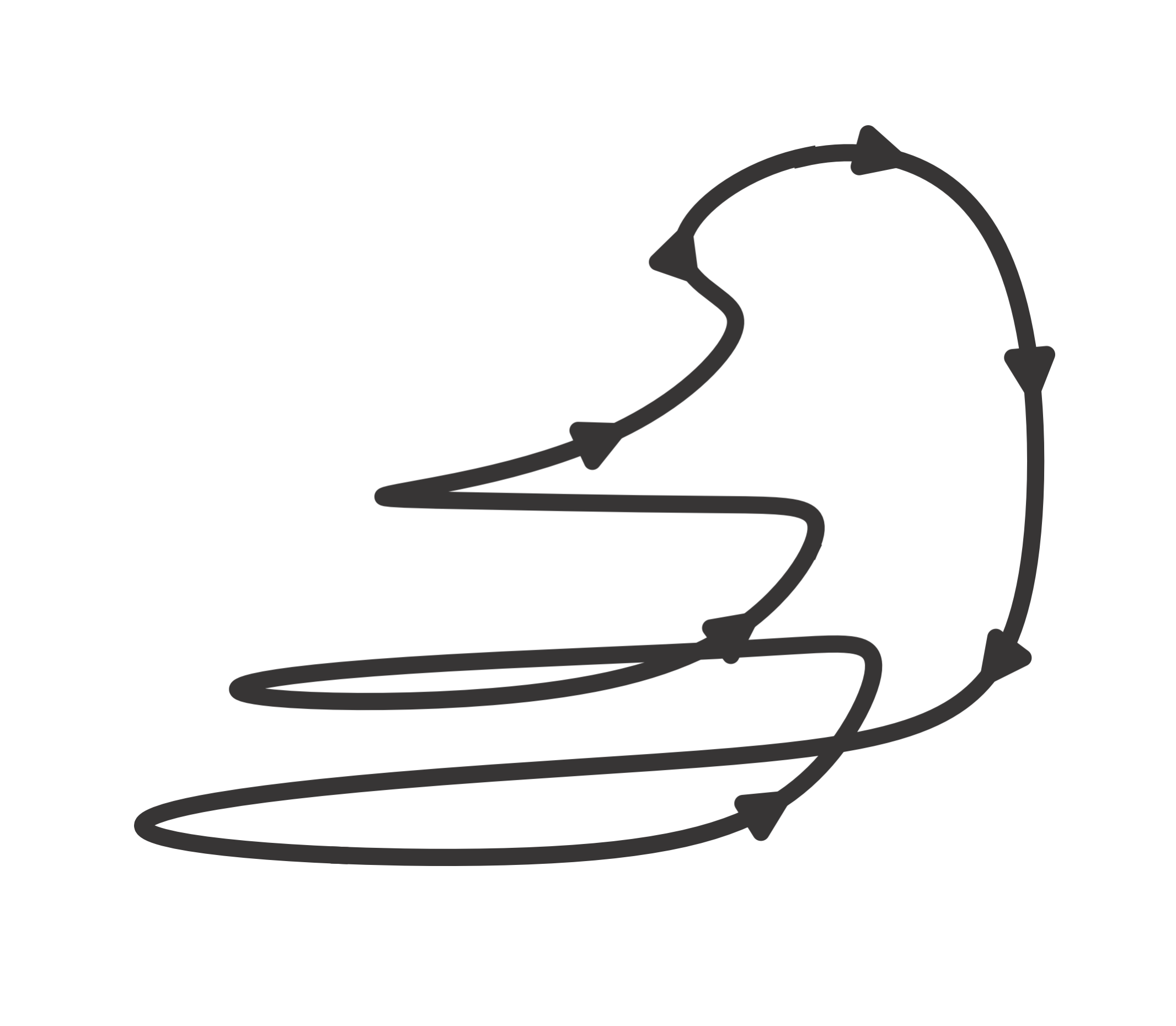
While rhythmic contractile behavior is commonly observed at the cellular cortex, the primary focus has been on excitable or periodic events described by simple activator-delayed inhibitor mechanisms. We show that Rho GTPase activation in nocodazole-treated mitotic cells exhibits both simple oscillations and complex mixed-mode oscillations. Rho oscillations with a 20- to 30-s period are regulated by phosphatidylinositol (3,4,5)-trisphosphate (PIP3) via an activator-delayed inhibitor mechanism, while a slow reaction with period of minutes is regulated by phosphatidylinositol 4-kinase via an activator-substrate depletion mechanism. Conversion from simple to complex oscillations can be induced by modulating PIP3 metabolism or altering membrane contact site protein E-Syt1. PTEN depletion results in a period-doubling intermediate, which, like mixed-mode oscillations, is an intermediate state toward chaos. In sum, this system operates at the edge of chaos. Small changes in phosphoinositide metabolism can confer cells with the flexibility to rapidly enter ordered states with different periodicities.
@article{Tong2023,
  title = {Periodicity, mixed-mode oscillations, and multiple timescales in a phosphoinositide-Rho GTPase network},
  author = {Tong, Chee San and Xǔ, X. J. and Wu, Min},
  journal = {Cell Reports},
  doi = {10.1016/j.celrep.2023.112857},
  year = {2023},
  issue = {8},
  volume = {42},
  pages = {112857},
}
2022
- Mechanical Resilience of Biofilms toward Environmental Perturbations Mediated by Extracellular MatrixQiuting Zhang, Danh Nguyen, Jung Shen B. Tai, and 5 more authorsAdvanced Functional Materials, Mar 2022
Biofilms are surface-associated communities of bacterial cells embedded in an extracellular matrix (ECM). Biofilm cells can survive and thrive in various dynamic environments causing tenacious problems in healthcare and industry. From a materials science point of view, biofilms can be considered as soft, viscoelastic materials, and exhibit remarkable mechanical resilience. How biofilms achieve such resilience toward various environmental perturbations remain unclear, although ECM has been generally considered to play a key role. Here, Vibrio cholerae (Vc) is used as a model organism to investigate biofilm mechanics in the nonlinear rheological regime by systematically examining the role of each constituent matrix component. Combining mutagenesis, rheological measurements, and molecular dynamics simulations, the mechanical behaviors of various mutant biofilms and their distinct mechanical phenotypes including mechanics-guided morphologies, nonlinear viscoelastic behavior, and recovery from large shear forces and heating are investigated. The results show that the ECM polymeric network protects the embedded cells from environmental challenges by providing mechanical resilience in response to large mechanical perturbation. The findings provide physical insights into the structure–property relationship of biofilms, which can be potentially employed to design biofilm removal strategies or, more forward-looking, engineer biofilms as beneficial, functional soft materials in dynamic environments. (Preview video adapted from Yan et al. (2019) eLife.
@article{Zhang2022,
  title = {Mechanical Resilience of Biofilms toward Environmental Perturbations Mediated by Extracellular Matrix},
  author = {Zhang, Qiuting and Nguyen, Danh and Tai, Jung Shen B. and Xu, X. J. and Nijjer, Japinder and Huang, Xin and Li, Ying and Yan, Jing},
  doi = {10.1002/adfm.202110699},
  journal = {Advanced Functional Materials},
  year = {2022},
  month = mar,
  pages = {2110699},
}

2019
-
 A web-based application of the Cellular Force Inference ToolkitX. J. XǔVanderbilt University, Mar 2019
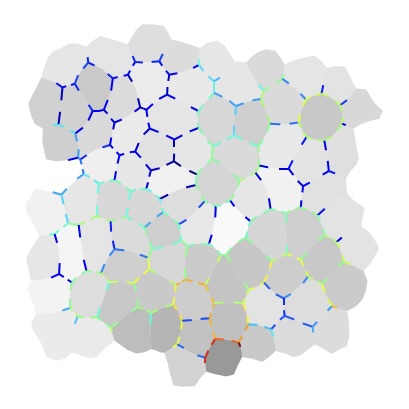
Honors Thesis: Given an image of an epithelial cell sheet, CellFIT can infer cellular forces by segmenting the image into individual cells, constructing equilibrium equations for the points where cells meet at triple junctions, and finding a least-squares solution for the tensions at cell-cell interfaces. Similarly, cellular pressures can be estimated by constructing Laplace equations that relate the edge tensions, curvatures and cellular pressure differences. Despite these capabilities, the accessibility of CellFIT to scientists of all backgrounds is not yet optimized. We will present an updated web-based application of CellFIT that allows users to access the software from a browser. The updated version includes improved error handling and the implementation of additional functionality for reading and processing image stacks. Application of the web-based CellFIT to time-resolved image stacks of wound healing in Drosophila epithelia demonstrates spatial and temporal variations in cellular forces as the wounds close.
@phdthesis{Xu2019,
  author = {Xǔ, X. J.},
  school = {Vanderbilt University},
  title = {A web-based application of the Cellular Force Inference Toolkit},
  year = {2019},
}
2018
- Simulation of laser-induced rectification in a nano-scale diodeDaniel Kidd, X. J. Xǔ, Cody Covington, and 2 more authorsJournal of Applied Physics, Mar 2018
Time-dependent density functional theory is utilized to simulate an asymmetrical jellium model, representing a nano-scale vacuum-tube diode comprised of bulk lithium. A sharp tip on one end of the jellium model allows for enhanced field emission upon interaction with an external laser field, leading to a preferential net current direction. This is verified by comparing the rate of electron transfer between the effective anode and cathode tips for both the diode jellium model and a symmetric cylinder jellium shape for various laser phase parameters. This rate of transfer is shown to significantly increase with smaller separation distances. With stronger laser intensities, this rate similarly increases but levels off as local near-field enhancements become negligible.
@article{Kidd2018,
  title = {Simulation of laser-induced rectification in a nano-scale diode},
  author = {Kidd, Daniel and Xǔ, X. J. and Covington, Cody and Watanabe, Kazuyuki and Varga, Kálmán},
  journal = {Journal of Applied Physics},
  doi = {10.1063/1.5019259},
  year = {2018},
  issue = {5},
  volume = {123},
}
